Allen Park Water Damage Restoration › Fire and Smoke Damage Restoration
Fire Damage Restoration in Allen Park, MI
Burned areas need protection from weather and theft. Allen Park Water Damage Restoration boards up and tarps the property, then removes soot. Allen Park has one career-staffed fire station, at 6730 Roosevelt Ave.
Response in Allen Park typically runs under 30 minutes. Call and a crew is dispatched to your address right away, any hour.
We back the work with a written guarantee that means a re-visit, not a payout.
Our Local Headquarters
The crew that answers calls from Allen Park starts at 19306 Ecorse Rd, Allen Park, MI 48101, Ste 101 (Three Jays Professional Building). The office sits on Ecorse Road near Allen Road, the city's main commercial corridor, putting the whole city within a short drive.
What Homeowners in Allen Park Should Know
Fire Department Info
The Allen Park Fire Marshal and Chief serve on the Downriver Fire Investigation Task Force, which covers 18 cities, so a major Allen Park fire cause investigation draws on a regional team. (City of Allen Park, Fire Department)
Allen Park fire service covers fire suppression, advanced life support ambulance transport, technical rescue and hazardous materials response from one station. (City of Allen Park, Fire Department)
Permits, Codes, and Rules
Selling an Allen Park house needs a city sales inspection. The inspection checklist requires smoke detectors in each sleeping room, outside sleeping rooms, and on each level. (City of Allen Park, Sales Inspection Guide and Checklist)
Contacts
The Allen Park Fire Department business line is 313-928-0024. The station is at 6730 Roosevelt. (City of Allen Park, Fire Department)
Fire starters seen in homes
- Pans left heating on a burner
- Loose connections and aging wiring
- Space heaters near paper or fabric
- Lint fires in dryers
- Hot embers from a hearth
- Candle flames near drapes
- Charcoal grills near siding, cluttered garages
Damage you may not see right away
- A faint campfire smell in far rooms
- Soot dust wiped away on a fingertip
- Browning paint overhead
- Water trapped in wall cavities
- Melted switch plates and plastic trim
- Rust spots on tools and appliances
Our step-by-step fire cleanup process
| No. | What the crew does |
|---|---|
| Safety, then board-up | Do not go inside until firefighters declare the building safe. A person in danger means a 911 call. Crews then close off openings with sheathing and tarps so rain and thieves stay out. |
| Inspect and test | Specialists scan each area with lights and test pads, find soot in places the eye misses, and trace smoke paths through walls and ductwork. Results go into a repair plan. |
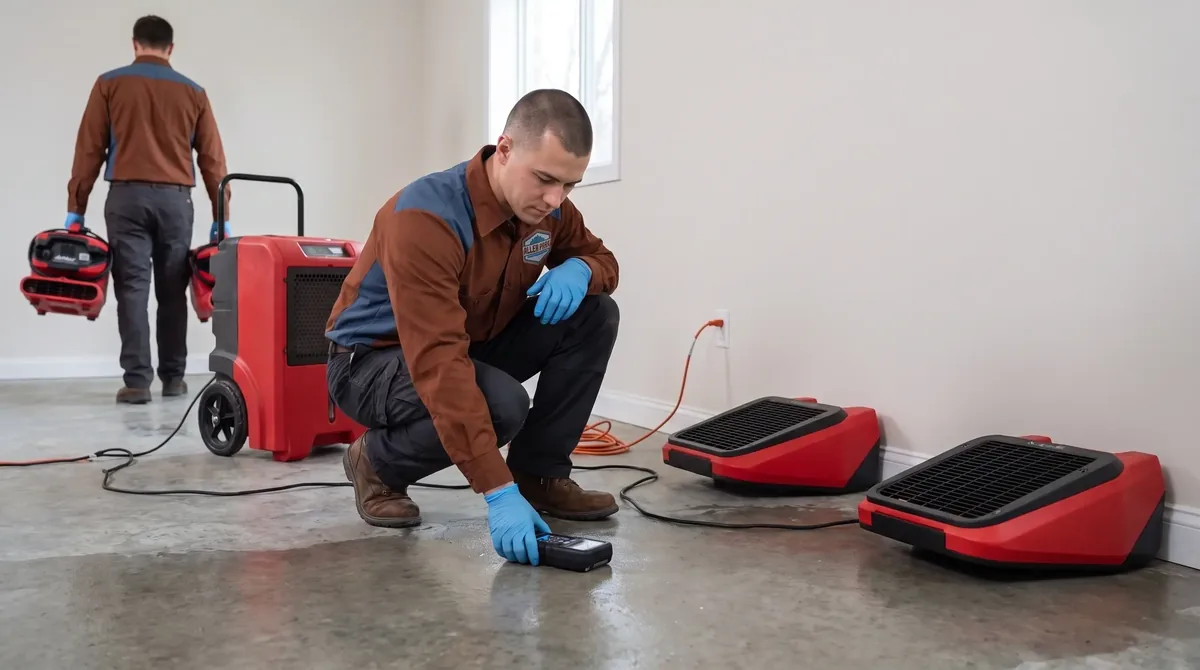
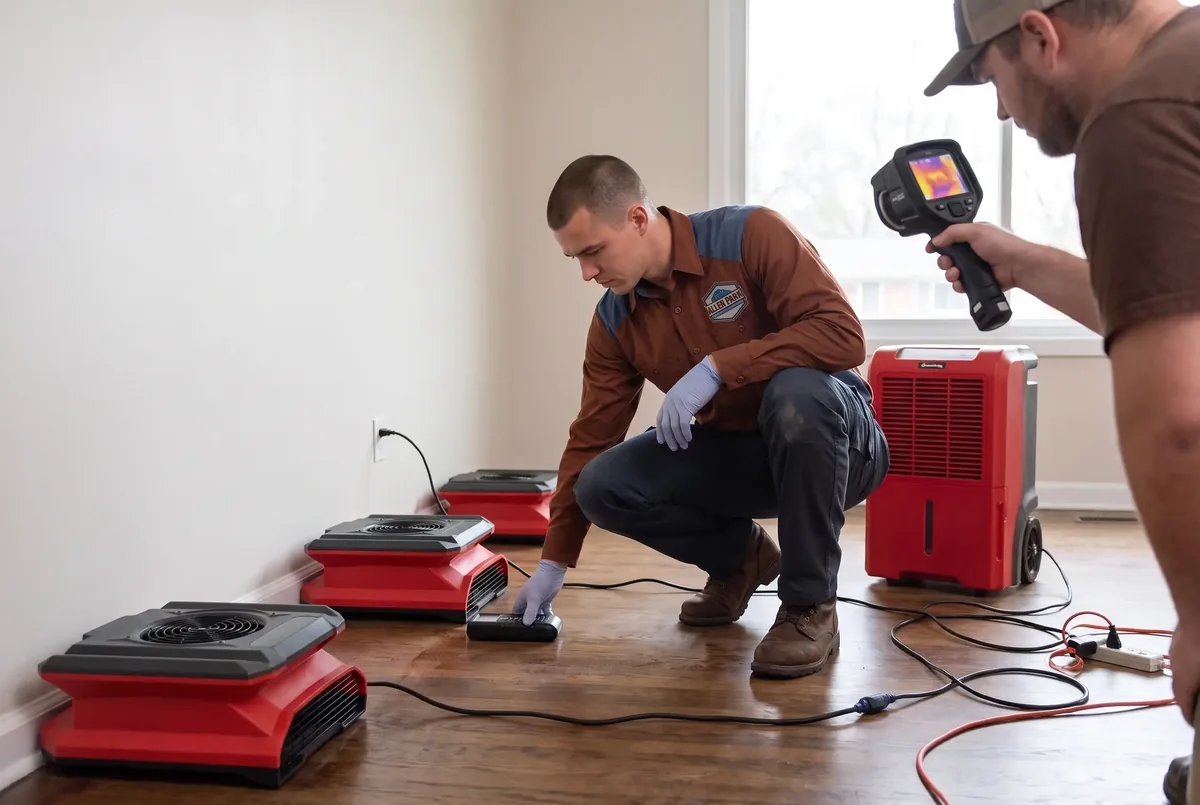
| Pull out firefighting water | Pumps clear pooled water first. Then crews pull wet carpet and padding, open wall cavities when needed, and set drying gear to protect wood and drywall from rot and mold. |
| Clean soot and smoke film | Crews begin with HEPA vacuuming to lift loose particles. Wet and dry cleaning follows, using agents suited to wood, paint, glass, metal, and masonry, from ceiling to floor. |
| Deodorize and filter air | Air cleaning units run through the work. Thermal fogging and ozone-free deodorizing get into hidden spaces where smell collects, and technicians confirm results room by room. |
| Contents care and paperwork | Cleaning teams treat salvageable belongings, from textiles to electronics. Lists, photographs, and notes record every loss, which helps with your claim and the rebuild estimate. |
Machines and supplies on the job
- Vacuums fitted with HEPA filters
- Air filtration units
- Thermal fog units for odor
- Ozone-free odor equipment
- Dry soot sponges, cleaners, and rags
- Sound-wave cleaning for small contents
- Panels and plastic sheeting for openings
- Moisture probes
Before, during, and after the work
Before work starts, you receive a written plan. During the work, the crew protects clean areas, keeps the site tidy, and checks in with you. After cleaning, we walk through the home together and check what is finished and what remains for rebuilding. Ask any question at any point and expect a direct answer.
Questions Callers Ask Most
Is the building safe after firefighters leave?
Not always. Fire crews check for immediate danger. Weak floors, damaged wiring, and soot remain risks. Request clearance from fire officials and wait for it. Then we walk through with you and explain what we find.
Does smoke odor fade for good?
It does once the real sources are treated. We lift soot, filter the air, and treat porous materials. If a smell comes back, we return to the area and treat it again. A few items will hold the smell for good.
Where do my possessions go?
Cleanable items go through treatment at our facility or on site. We tag and photograph each one. Items that cannot recover are documented. You approve decisions about disposal, and you keep a copy of the list for your claim file.
Who removes the firefighting water?
Our crew does. We use pumps and extractors for pooled water, then dehumidifiers and air movers for trapped moisture. Moisture meters guide us. Wet insulation and drywall that cannot dry are removed. Prompt drying limits further harm to the structure.
Where do I start?
Get everyone to safety and dial 911 if danger exists. Stay outside the home until fire officials permit entry. Then take photos of what you can see, list damaged items, and contact your insurance company.
What is the local picture on fire response in Allen Park?
Allen Park has one career-staffed fire station, at 6730 Roosevelt Ave.
What is the local picture on repair permits in Allen Park?
Selling an Allen Park house needs a city sales inspection. The inspection checklist requires smoke detectors in each sleeping room, outside sleeping rooms, and on each level.
A fire hit your Allen Park property?
Talk to a person at (313) 306-8373.
Response in Allen Park typically runs under 30 minutes. Call and a crew is dispatched to your address right away, any hour.
On-site estimates don't cost you anything.
We back the work with a written guarantee that means a re-visit, not a payout.